Cincy Baja Team defends their first place title in competition this week
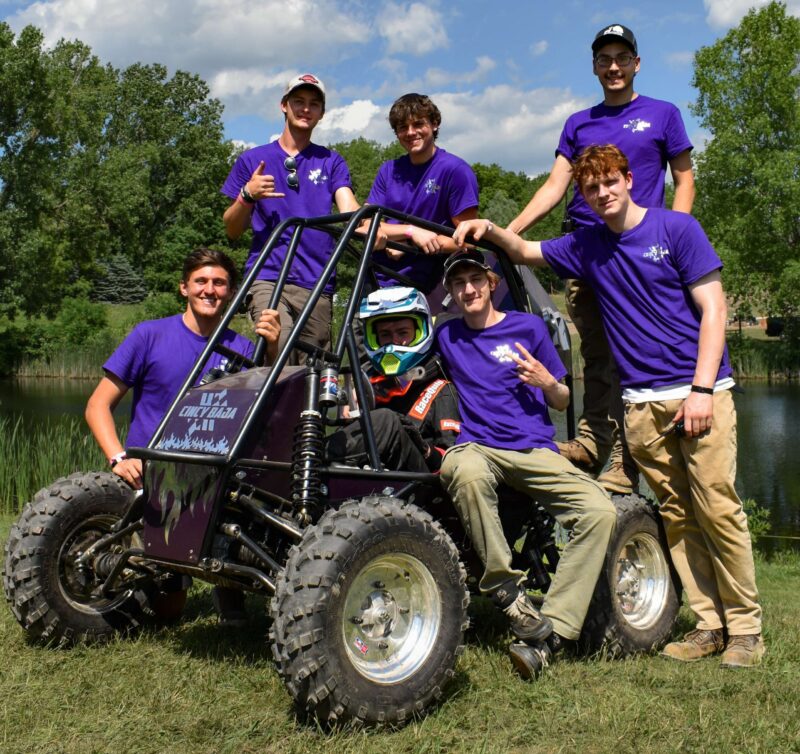
Cincy Baja, a group of Cincinnati State Mechanical Engineering Technology (MET) students, will compete this week at Baja SAE Ohio, where the team will defend their first place standing in the sled pull event, using the single-seat, all-terrain off-road vehicle they designed and built to pull a heavy object down a track.
The Ohio Baja competition, which includes several different tests of the student-built car, takes place September 24-27 at Briarcliff Motocross in Nashport, Ohio (near Zanesville).
Spectators are welcome on Saturday and Sunday if you want to take a field trip (about 2.5 hours) and show your support for the Cincy State team as they assess their newest vehicle in contests against cars built by four-year university engineering students. Few other two-year colleges compete regularly in Baja events.
MET students from Cincinnati State have participated in Baja events since 2022, when MET Program Chair Zane Decker introduced students to this unique opportunity to apply their engineering skills by designing and building an off-road sporting vehicle.
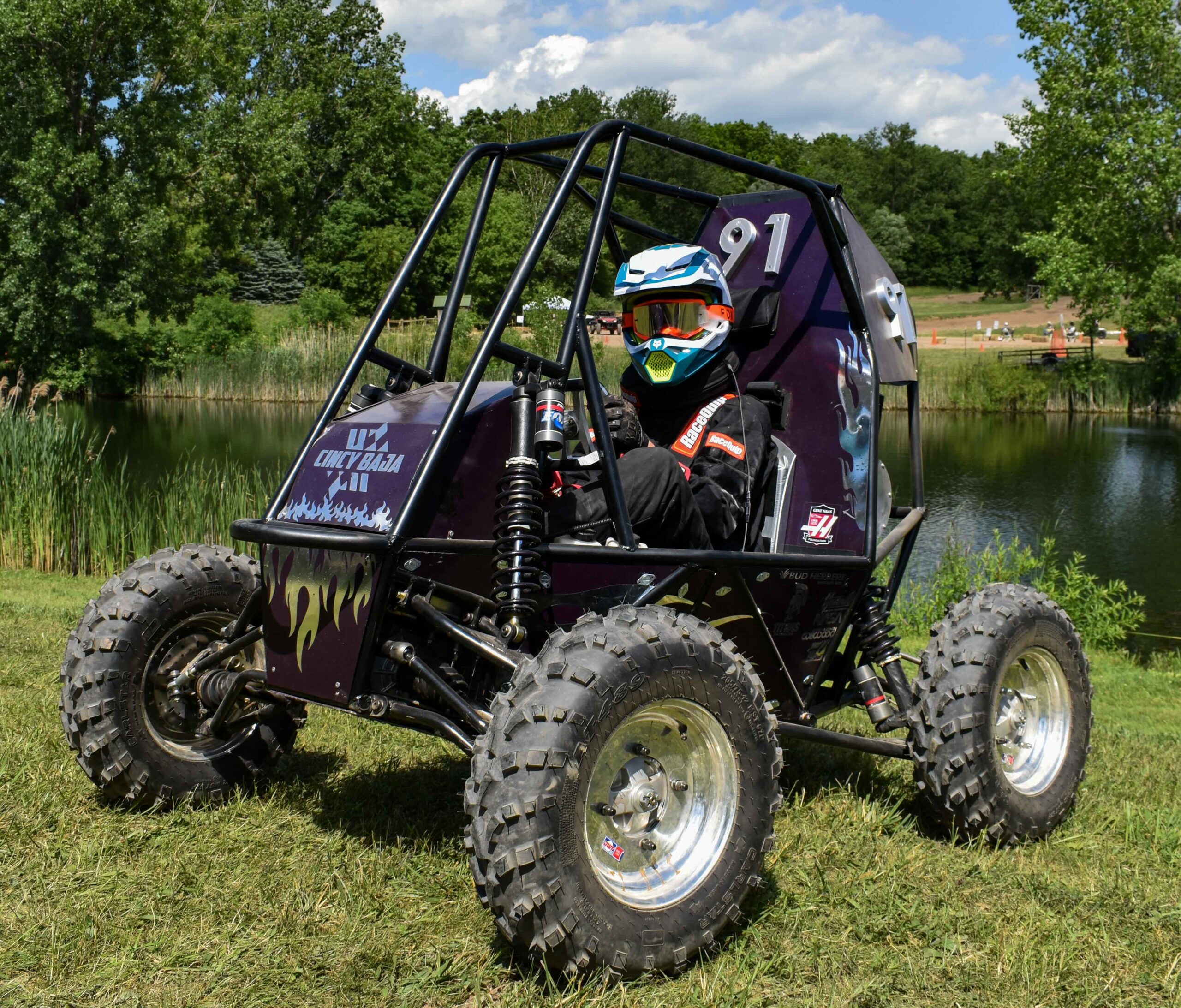
The task for all Baja teams is to create a prototype for a reliable, maintainable, ergonomic, and economic production vehicle to serve recreational users. The Baja events simulate real-world engineering design projects and related challenges
All student vehicles are powered by a Kohler engine, modified for competition use, that is provided to student teams at a discount.
The Cincy Baja team won the sled pull event in a 2023 international competition using a car they named “Jazz”. For the Ohio competition this week, students will use a redesigned version of a new car, “Titan,” that initially was built as the MET Capstone course project for Fall 2025 and Spring 2026, and first raced in a Spring 2026 Baja event.
Decker said, “Our team of MET Capstone students saw opportunities for improvement, so over this summer the students completely redesigned the front and rear suspension, steering, and drive line components for better performance.”
Decker said student design goals for the Fall 2026 Capstone included creating a smaller, lighter, and more maneuverable car with better ergonomic experiences for the driver.
Cincy State students design and build all car components using on-campus tools
“Unlike a lot of bigger schools, the Cincy Baja students make all of our car components in-house instead of getting some parts from external vendors,” Decker said. “Our students could use new tools like our fiber laser cutter, 5-Axis CNC machining tool, and wire electric discharge machine (W-EDM) to completely redesign portions of the car.”
“The new equipment opened the door to new design and manufacturing workflows that weren’t possible for our previous Baja teams,” Decker said. “These innovations are examples of true advanced manufacturing techniques and skills our MET students gain through our MET-Manufacturing program.”
Team member Jeff Fawcett said, “Using the fiber laser cutter to create components from steel sheet saved us time and money while developing parts. Also, steel is much easier to weld than aluminum so that will help us successfully make repairs in the field at the Baja event.”
“The changes we made over the summer made our car more stable, which helps increase the driver’s confidence and allows the car to safely tackle bigger obstacles at higher speeds,” Jeff added.
Team member Ethan Timon observed, “As the steering lead, I’m looking forward to increasing our score in the maneuverability and endurance events. The testing, design, and manufacturing we completed over the summer helped us identify key areas for improvement. I’m confident the changes we made will improve the overall steering performance.”
Both Jeff and Ethan said being part of the Baja team is a valuable addition to their Cincinnati State education, despite the extra work involved.
“The Baja project has given me more options for gaining engineering knowledge along with learning how to manage a large project and work with a team,” Ethan said. “These real-world applications of engineering and manufacturing can’t be replicated in a traditional classroom.”
Jeff added, “The Baja project has helped me learn to create better designs while dealing with requirements and constraints. I think that mirrors what I’ll be expected to do on the job. The Baja project is preparing me to have confidence and independence when I’m contributing to an engineering team.”
(Reporting and photos provided by Zane Decker)